On Barys diatonikos (Ga and Ga diesis)
This mode is interpreted in
many ways, and I’ve explained « special intervals » on the
analogion.com page.
There is one issue I forgot to
mention :
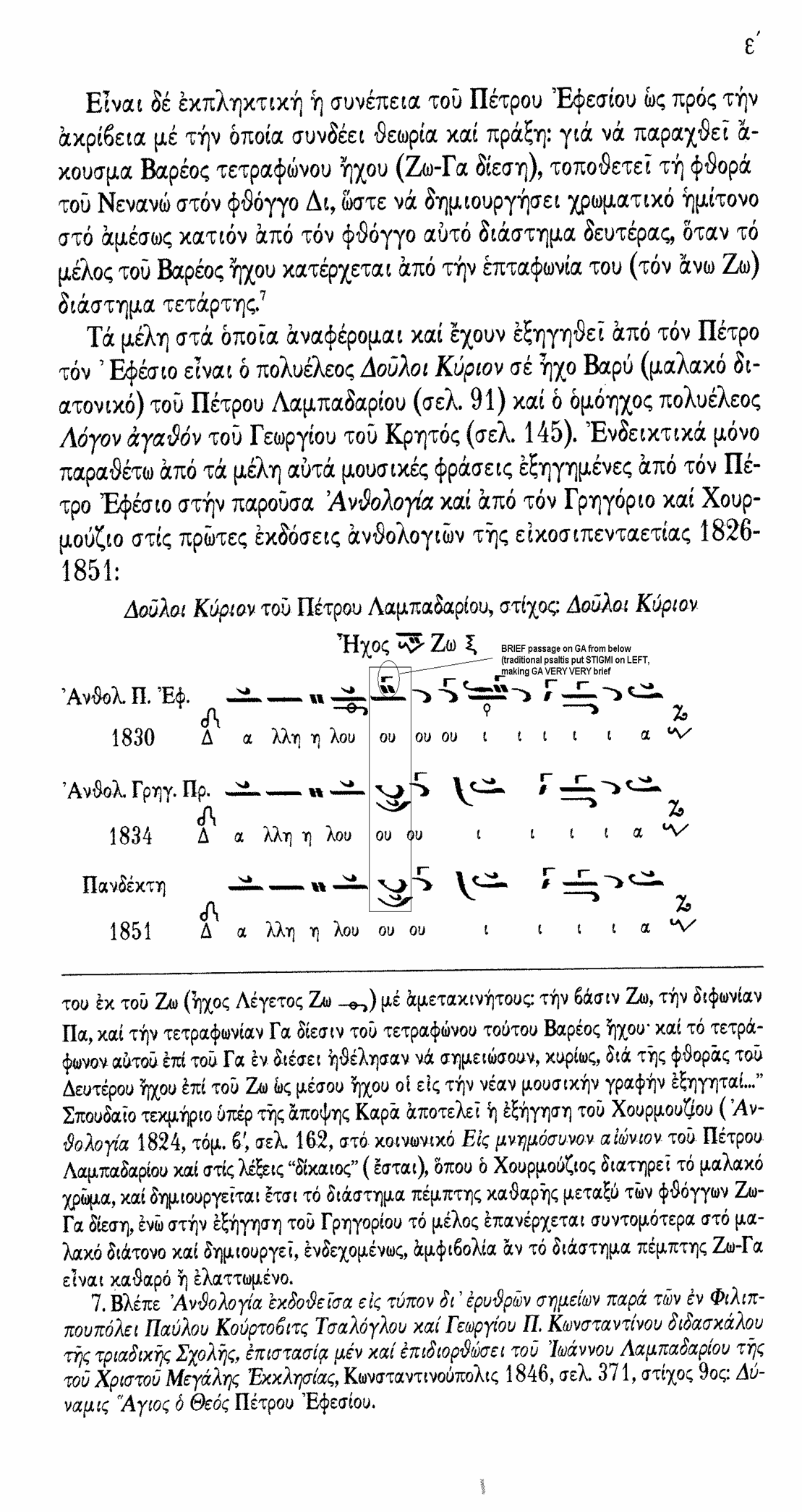
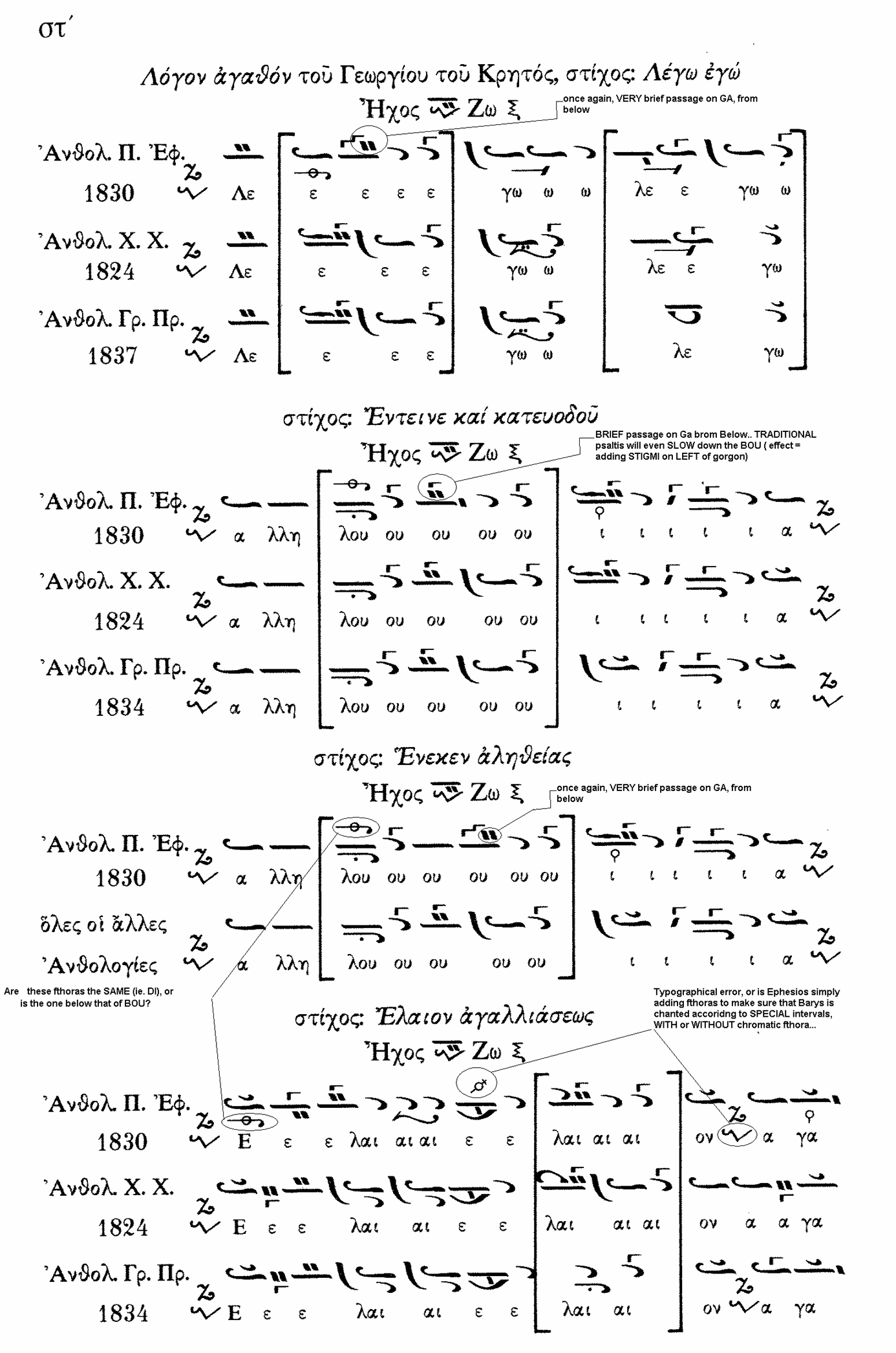
TRILLS and BRIEF passages from Pa to GA are done in such manner that GA
is ALWAYS BRIEF and CHROMATIC (upraised)
-------
BRIEF = STIGMI to LEFT of
GORGON on Ga (this is usually not explicitly
shown). This is obtained by SLOWING the Chreironomia hand during its CYCLICAL movement of chronos counting (dominanat
hand)… the rest of the remaining measure is counted by a VERY rapid circle.. in other words, a PARESTIGMENTON is NOT exactly (2/3 and
1/3) and not (3/4 + 1/4) either… the effect of chronos
counting gives a much more “subtle” or “complex” division (I’d say between (3/4 + 1/4) and (4/5 and 1/5) that is,
between 3/4 and 4/5 for the first part…only COMPUTER analysis will demonstrate
this. On other occasions, the first division is
between 2/3 and 3/4….
---------
Back to the pitch of GA:
The other example where GA is raised
is when moving towards Di and heptaphonic
Zo.
Otherwise, GA is in its psaltic position (diatonic Ga, =
LOWER than piano Ga) according to most psaltis. According
to SPECIAL intervals, it is even lower…
Recall that PA and BOU are lowered as well… Trill from PA to GA with such a scale are too
« numb » (lifeless), and psycho-acoustically, LIFTING the GA DURING
TRILLS with a BRIEF GA as an upper maximum gives a sound that is aesthetically
(acoustically) more convenient and « full of life » =
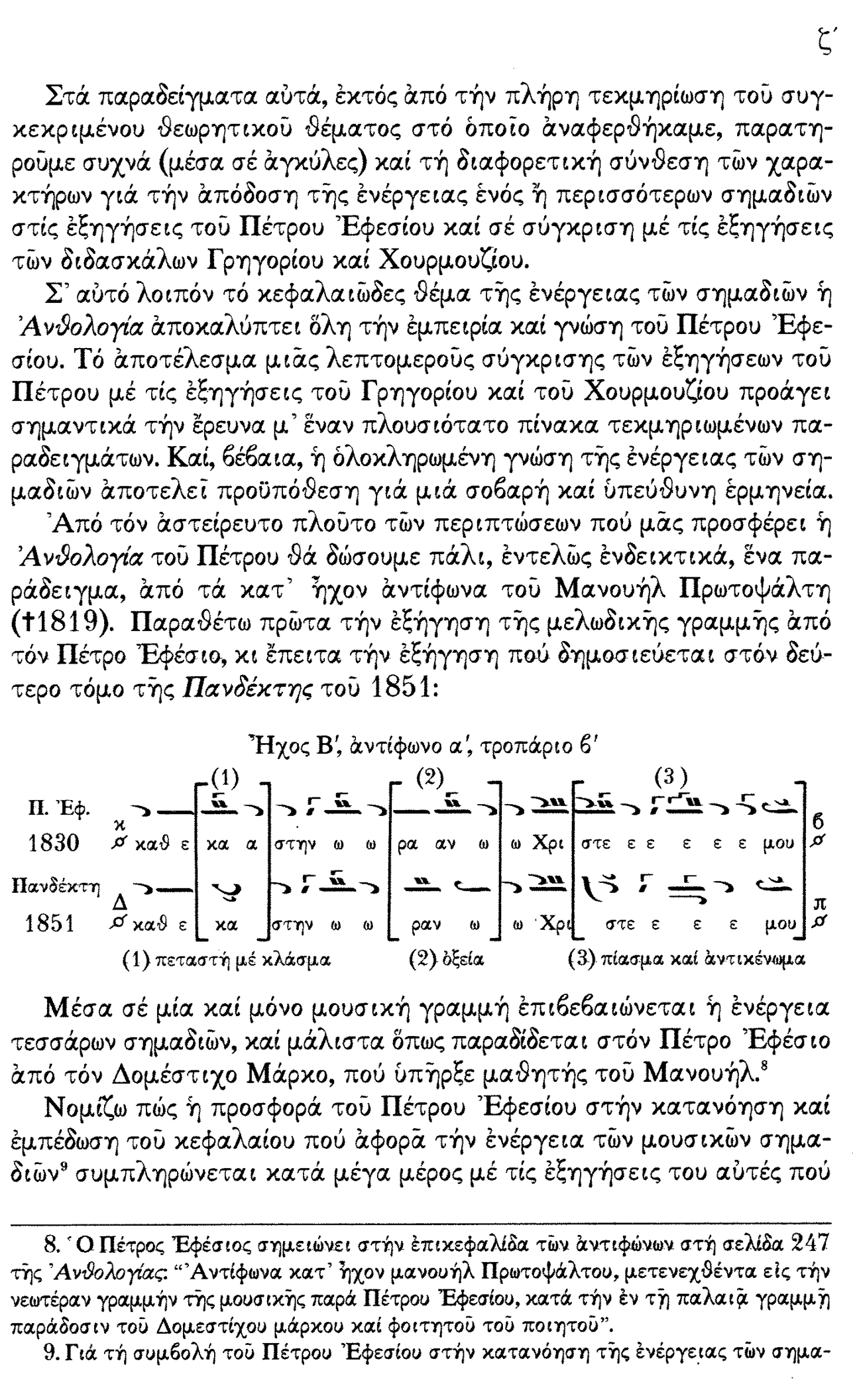
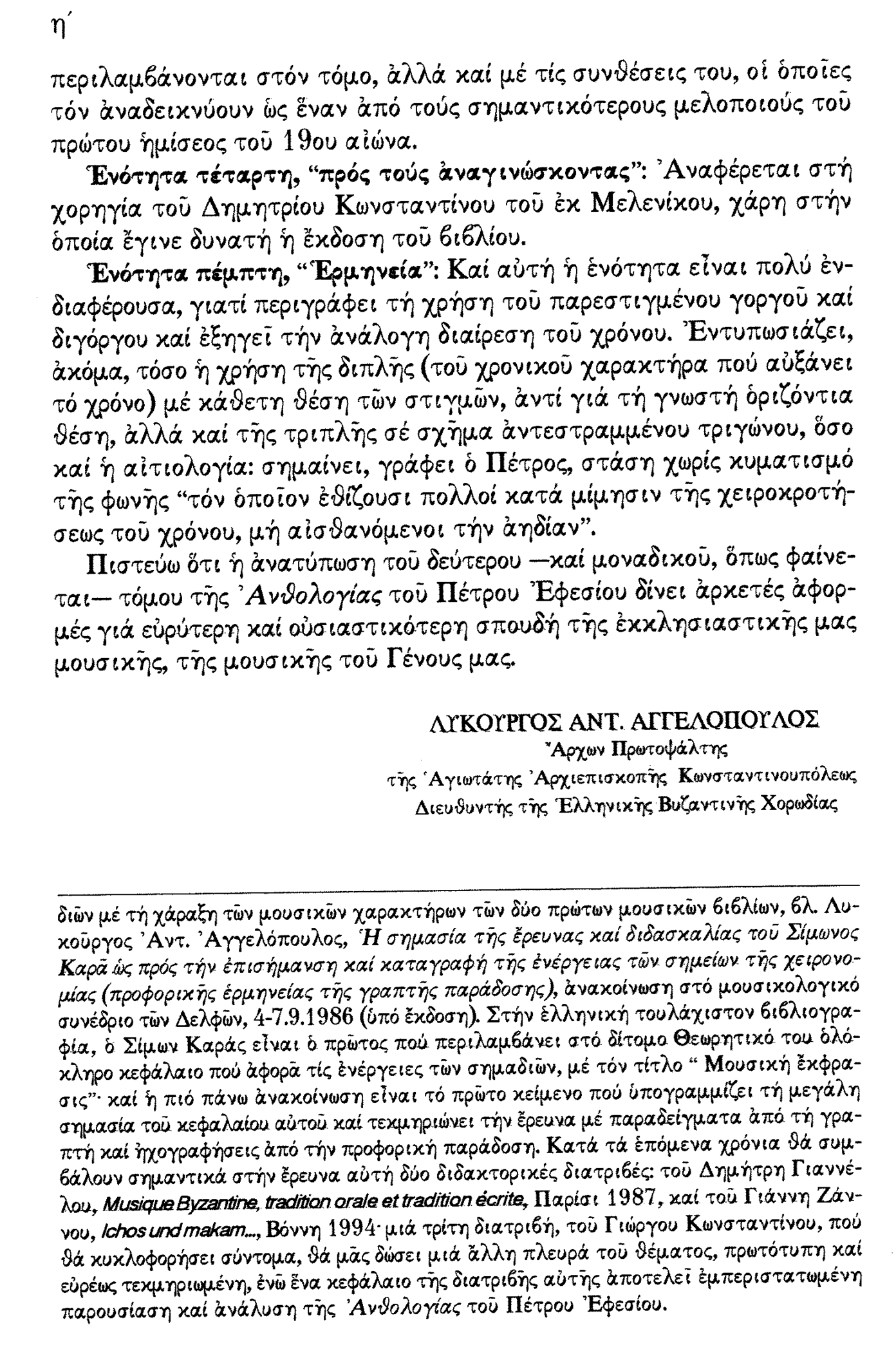
Here are Lycourgos
Angelopoulos’ comments on his understanding of Barys diatonikos as transcribed by Petros
Ephessios.
I draw the reader’s attention
to the ONE parameter that ONLY a CREDIBLE PSALTIS can teach as STUDENT
concerning BARYS diatonikos (recall that according to
IAKOVOS NAFPLIOTIS, SIMON KARAS was NOT ACQUAINTED with psaltiki): GA is upraised in the situations mentioned
above. In other words, Barys diatonikos does NOT boil
down to some STANDARD chromatic mode, or to some legetos,
or to anything else… it is SO complex, that even among TRADITIONAL psaltis, who otherwise chant the SAME intervals (Note: NOT
those of Simon Karas et) there are SOME VARIANTS as
concerns SOME intervals of this mode.
Finally, if one wishes to
demonstrate how Ephesios
shows developments (analyseis), why not have a look
at the Evlogitarions and Douloi
Kyrion of Petros Peloponnesios, where he puts PARESTIGMENTONS (UNEQUAL
divisions, ANISOCHRONOS diaresis) ALL OVER the place
(of course, Simon Karas NEVER managed to sing these
or anything even simpler correctly…)
WHO are you going to believe :
Simon Karas
who was NOT acquainted with our music (and who, by some “revelation” became a “sophos didaskalos” for his
followers),
OR
what TRADITIONAL
PSALTIS CHANT,
EVEN if they do not
have Petros Ephesios’s
score and some Simonokaraitic diploma, or some other
university degree concerning “Byzantine music”.